Paving advice
Your asphalt driveway and winter
What to do in October, in January and at the thaw
An asphalt driveway ages mostly between November and April: water gets into the cracks, freezes dozens of times, then the thaw softens the base. Here, month by month, are the steps that prevent most of the damage, and what to have repaired before the first snow.
- Free quoteWe come take a look, no obligation.
- Clear priceEvery step spelled out in the quote.
- Hot asphaltLaid with a paver, rolled.
- Quick callbackThe owner, not a salesperson.
On this page
- The essentials in six steps
- Why winter wears a driveway more than cars do
- The calendar, month by month
- Before the snow: the October–November list
- De-icers: which one for asphalt
- Snow removal without damaging the driveway
- The thaw: rut season
- In spring: what to have repaired
- Frequently asked questions
- Sources
The essentials in six steps
- Close 3–20 mm cracks before the freeze, on a dry day above 5 °C: it is the winter protection that pays back the most.
- Set the snow markers 30 cm from the edge, not in the asphalt, before the first snow.
- Ask your snow-removal contractor for a raised blade or shoes, especially on a driveway less than a year old.
- Anchor the Tempo shelter once, with permanent anchors, within your city’s dates.
- Go easy on de-icers: abrasive first, salt or calcium chloride only on stubborn ice.
- Keep heavy trucks off the driveway during the thaw, from March to May.
Why winter wears a driveway more than cars do
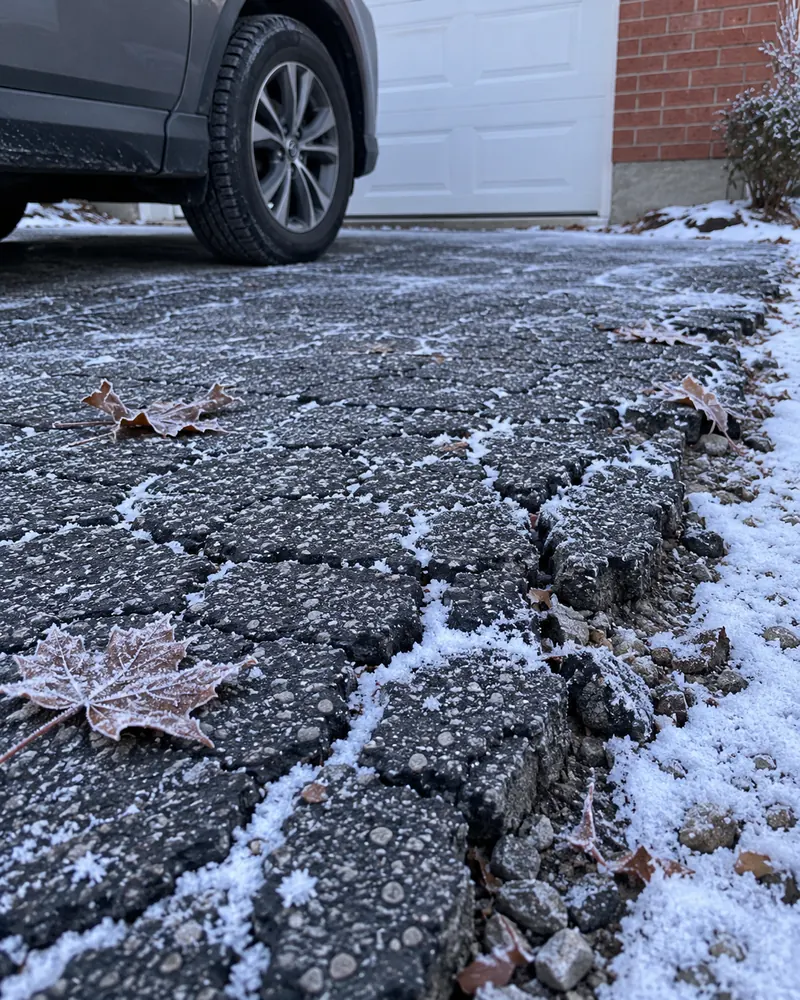
- The number of cycles. The Montréal area has 67 to 85 days a year when the temperature crosses 0 °C, according to Environment Canada’s climate normals. Each cycle pushes frozen water a little harder against the walls of a crack.
- Frost depth. The ground freezes 1.2 m to more than 3 m deep, for more than four months, according to Québec’s transport ministry. Water trapped in a poorly drained base freezes, swells and lifts the asphalt.
- Thawing from the top. In spring, the base thaws before the soil beneath it: meltwater can’t drain down, and the pavement keeps only 30 to 70% of its summer strength. That is when ruts form.
- The cold itself. The mix shrinks and snaps into transverse cracks, which open wider in winter than in summer.
A flat, well-drained driveway with no open cracks goes through all of this with almost no damage. A driveway that holds water gets a little worse every winter.
The calendar, month by month
| Period | Do | Avoid |
|---|---|---|
| October and early November | Seal cracks, rebuild potholes hot, set the markers, install the Tempo shelter within the city’s dates, extend downspouts | A surface sealcoat in cold weather: most products need 10 °C |
| First snow | Clear the snow before tires pack it down | Letting packed snow turn into ice |
| December to February | Abrasive on ice, de-icer in small amounts, snowblower riding on its shoes | Breaking ice with a pick or an axe on the asphalt |
| Late February and March | Move the snowbank that always melts in the same spot | Letting meltwater run toward the garage |
| Thaw (March to May) | Keep the driveway for cars | Moving trucks, dumpsters, concrete trucks, soil deliveries |
| After the shelter (April, May) | Walk the driveway, note cracks and dips | Putting off until fall a repair that is growing |
Open cracks before the snow? We can still close them this fall
Before the snow: the October–November list
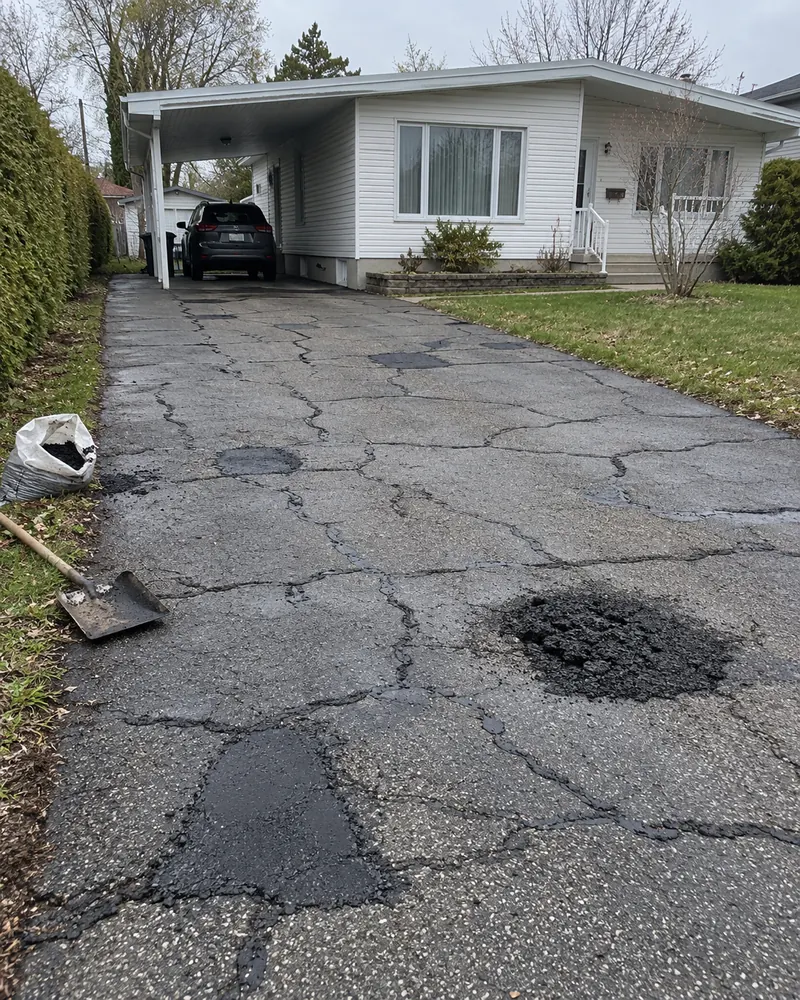
Cracks. A 3–20 mm crack left open in November takes in meltwater all winter. The transport ministry cleans it out and seals it with a hot product that stays flexible in the cold; it seals between 5 and 30 °C, in dry weather. In November, the average daily high is still 4.7 to 6.1 °C depending on the station: some dry afternoons allow it. We do it for $250–400 below 200 linear feet through our asphalt repair service.
Potholes and weak edges. The blade catches the rim of a hole and enlarges it all winter, and snow pushed onto an unsupported edge crushes it. A pothole can be rebuilt with hot mix as long as the plants are producing.
Snow markers. Set about 30 cm from the edge, in the soil, they guide the plough without piercing the asphalt; a stake driven into the mix opens a hole where water will freeze.
The Tempo shelter. Each city sets its own period: from October 15 in Laval, Mascouche or Blainville, from October 1 in Terrebonne, from November 1 in Brossard and Rosemère, and depending on the borough in Montréal. Lorraine bans them. All the dates are in our guide to Tempo shelter dates by city. Tempo shelter installation: single $199, double $299 before taxes; $329 and $449 with spring removal. See our prices and prices published elsewhere.
Downspouts. A downspout that empties onto the asphalt makes a skating rink, then a crack. Extend it toward the lawn.
De-icers: which one for asphalt
Salt doesn’t dissolve bitumen; what damages a salted driveway is water freezing and thawing more often in its cracks and pores. The right reflex: clear the snow early so ice doesn’t form, then treat only what is left.
| Product | What it does | For asphalt |
|---|---|---|
| Abrasive (sand, grit) | Adds traction without melting | No effect on the mix; sweep it up in spring |
| Road salt (sodium chloride) | Melts ice; loses most of its effect below about −10 °C | Fine in small amounts on sound asphalt |
| Calcium chloride | Works at much lower temperatures, in smaller doses | Fine in small amounts; costs more |
| Fertilizer or products not meant for de-icing | Nothing useful on ice | Avoid |
On a freshly sealed driveway, the surface is smoother: keep abrasive near the door and on the slope.
Snow removal without damaging the driveway
- By shovel: a plastic blade or one edged with rubber; push the snow rather than scrape.
- By snowblower: set the shoes so the auger doesn’t touch the surface.
- With a snow-removal contractor: ask for shoes or a raised blade on a driveway less than a year old, and point out weak edges and curbs before the first storm. In spring, most of the gouges we are shown come from a steel blade that scraped the surface.
- On a parking lot: mark catch basins, islands and curbs; a plough that can’t see a catch basin breaks it. See our commercial paving page.
The thaw: rut season
From 2021 to 2025, the ministry’s load restrictions in zone 1, which covers Montréal, lasted 39 to 46 days, between early March and early May; in 2026, they started on March 16. What holds for trucks on the road holds for your driveway: during that period, a water-logged base keeps the marks of a heavy vehicle. Postpone the soil delivery, the dumpster or the move, or have them park on the street.
In spring: what to have repaired
Once the shelter is down and the driveway is dry, walk around it with a tape measure:
- New or wider cracks, 3 mm and up: seal them during the season.
- Potholes: cut out and rebuilt hot.
- Anchor holes left by the shelter: close them before they turn into cracks.
- Dips and bumps that come back: that’s the base. Our article resurfacing or rebuilding helps you decide, and when to redo your driveway lists the signs of a rebuild.
Frequently asked questions
How do I protect my asphalt driveway before winter?
Seal 3–20 mm cracks on a dry day above 5 °C, rebuild potholes with hot mix, set snow markers in the soil 30 cm from the edge and extend downspouts that empty onto the asphalt. A surface sealcoat needs 10 °C and can wait.
Does salt damage asphalt?
Not directly: it doesn’t dissolve bitumen. It multiplies freeze-thaw cycles in the cracks and pores of asphalt that is already worn. Use abrasive first, and a little salt on stubborn ice.
Can cracks be sealed in November?
Yes, on a dry day above 5 °C, on a surface that isn’t frozen. Some November afternoons still allow it in the Montréal area, and it is the last chance to close a crack before winter.
Can a snow-removal contractor damage my driveway?
Yes, especially a steel blade scraping the surface or catching a weak edge. Ask for shoes or a raised blade, particularly in the first year, and point out weak edges and curbs before the first storm.
Does a Tempo shelter damage asphalt?
Spikes driven in and pulled out every season leave holes where water freezes. Permanent anchors drilled once, away from cracks and edges, avoid that damage.
Why avoid heavy trucks in spring?
Because during the thaw, the base is water-logged and keeps only 30 to 70% of its summer strength, according to Québec’s transport ministry. A moving truck or a dumpster leaves ruts there that summer won’t erase.
Sources
- Environment and Climate Change Canada, 1991–2020 climate normals (freeze-thaw days, November highs by station).
- Québec transport ministry, En période de dégel, roulez léger (2026) and zone 1 load restriction notices (2021 to 2026).
- Québec transport ministry, crack-sealing practice (3–20 mm, 5–30 °C).
- Municipal by-laws on temporary car shelters, read October 26, 2026 (see our dates guide).
- Sealer technical sheets (Henry, Techniseal): minimum application temperatures.
- Environment Canada, Code of Practice for the Environmental Management of Road Salts (2004).
2026 prices in detail: sources and calculator.
Go further.
When to redo your asphalt driveway: seven signs ranked by urgency
Alligator cracking, dips that hold water, winter bumps, crumbling edges, potholes, a grey surface: what each sign means, what can’t wait until after winter and what it costs in 2026.
Read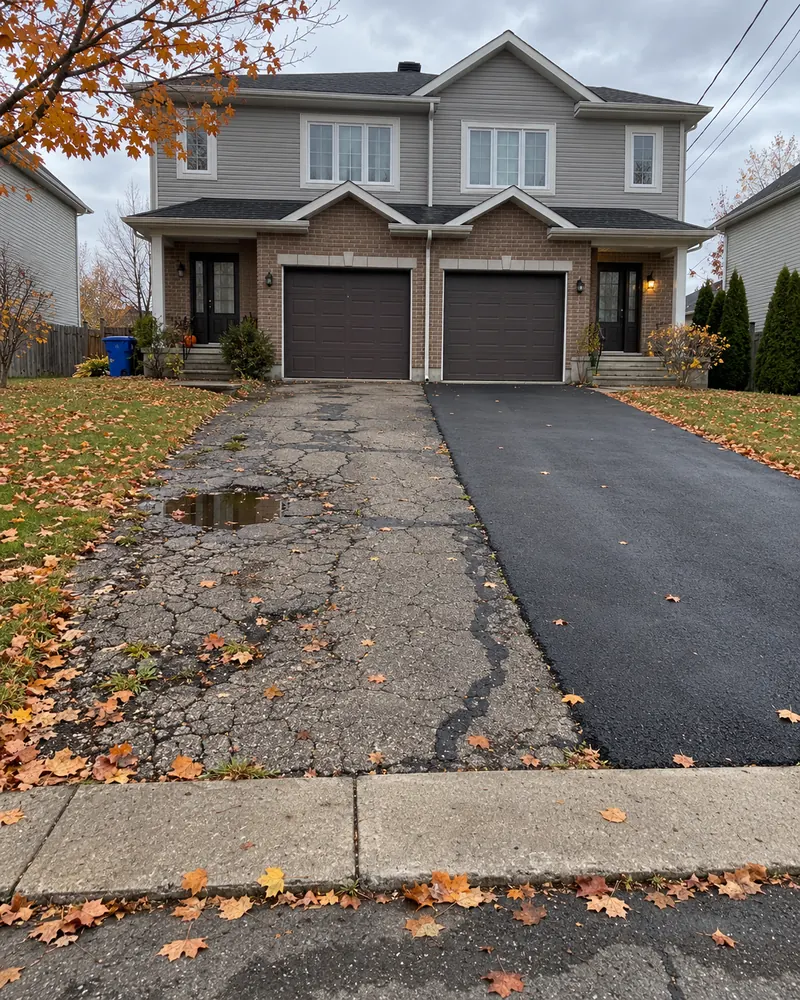
How many years does an asphalt driveway last in Quebec?
Built right, an asphalt driveway lasts 15 to 20 years or more in Quebec. The 6 benchmarks to demand, how to read the damage, and the cost per year of each fix.
Read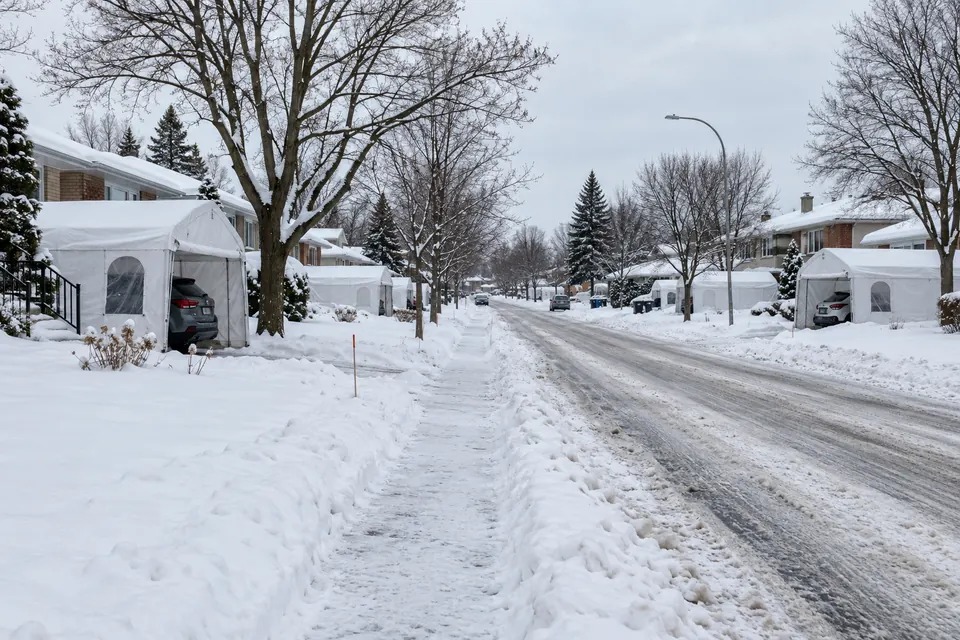
Tempo shelter dates 2026-2027: when to put up and take down your shelter in 52 Québec cities
When to put up and take down a Tempo shelter in 2026-2027 in 52 cities: Québec City October 1, Laval and Gatineau October 15, Brossard November 1. Checked October 26, 2026.
ReadBefore the freeze, not next spring.
Describe your project in two minutes. We call you back quickly, come take a look and you get your price, free.