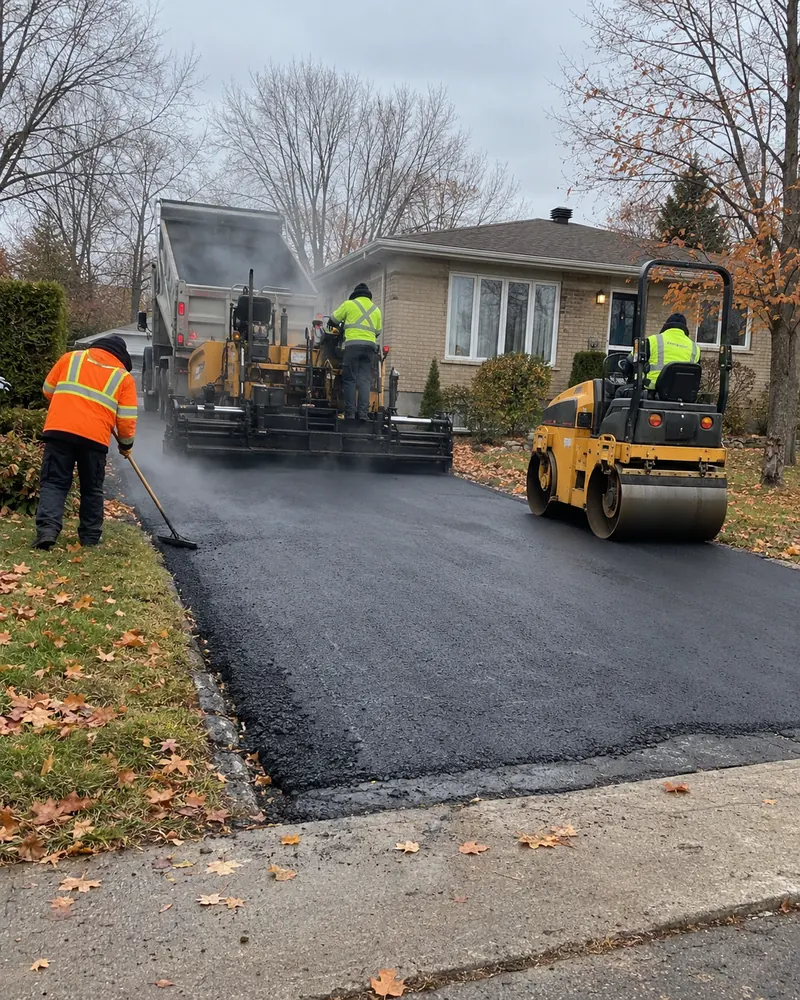
Resurfacing · $3–5.50/ft² in 2026
Asphalt resurfacing
A new surface in one day, if the base still holds
We repair what needs repairing, bond the new layer with a tack coat, then spread and compact 50 mm (2 in) of hot mix over your asphalt. Expect $3 to $5.50 per square foot in 2026, half the price of a rebuilt driveway. The free visit first checks that your base can carry it.
- Free quoteWe come take a look, no obligation.
- Clear priceEvery step spelled out in the quote.
- Hot asphaltLaid with a paver, rolled.
- Quick callbackThe owner, not a salesperson.
On this page
- How much does driveway resurfacing cost in 2026?
- Can your driveway be resurfaced?
- The 7 steps of a resurfacing job that lasts
- 40 or 50 mm: which thickness?
- Garage, sidewalk, street: getting the transitions right
- What a Québec winter does to a resurfaced driveway
- How long does resurfacing last?
- Sealcoating, repair, resurfacing or rebuilding?
- Do you need a permit to resurface?
- What your resurfacing quote should spell out
- After paving: the first days and the first year
- Frequently asked questions
- Sources
Resurfacing, also called an overlay, renews the surface of an asphalt driveway without touching its stone base: localized defects are repaired, a bitumen emulsion is sprayed on as glue, then a 40 to 50 mm layer of hot mix is spread and compacted. It is the right call for asphalt that is grey, porous or cracked at the surface, on a driveway that stays flat and drains toward the street. It is the wrong call on a base that has moved: the new layer follows the dips and lets the old cracks come back through.
- 2026 price: $3–5.50/ft² before tax, or $1,200–2,200 for a 400 ft² double driveway.
- Thickness: 50 mm once compacted (2 in), never less than 40 mm.
- On site: one day for a house driveway, then 2 to 3 days before you drive on it.
- Added life: 10 to 15 years according to Protégez-Vous and the APCHQ, on asphalt free of major cracks, dips and bumps.
How much does driveway resurfacing cost in 2026?
In Greater Montréal, resurfacing costs $3 to $5.50 per square foot before tax in 2026, about half the price of a driveway rebuilt with excavation ($6–10/ft²). Those are the ranges contractors in the region publish, the same ones as on our 2026 price page and its calculator.
| Driveway size | Resurfacing, before tax | Resurfacing, with tax | Rebuilt driveway, before tax |
|---|---|---|---|
| 200 ft² (one car) | $600–1,100 | $690–1,260 | $1,200–2,000 |
| 400 ft² (two cars) | $1,200–2,200 | $1,380–2,530 | $2,400–4,000 |
| 600 ft² | $1,800–3,300 | $2,070–3,790 | $3,600–6,000 |
With tax: 5% GST and 9.975% QST. Spread over the 10 to 15 years it adds, resurfacing a 400 ft² driveway works out to about $80–220 per year of service. What puts your driveway at the low or high end of the range:
- Repairs done before the layer: potholes cut out and redone with hot mix, sunken areas rebuilt in the stone. It is the item that varies most from one driveway to the next.
- Milling at the transitions: a strip of old asphalt removed in front of the garage, at the sidewalk or along the pavers, so there is no step.
- Thickness: 50 mm instead of 40 means 25% more mix.
- Size and access: the truck, the paver and the crew cost almost as much for 200 ft² as for 400, and a plex driveway off a lane is partly done by hand.
- Bitumen: the Ministère des Transports reference price for PG 58S-28 bitumen rose from $945 to $1,335 a tonne between January and September 2026. By our calculation (2.35 t/m³, 5.0 to 5.4% bitumen), a 50 mm layer now carries $0.21–0.23 more per square foot than in January, or $85–92 on 400 ft².
Your range in 2 minutes with the questionnaire, then a free visit that checks your base
Can your driveway be resurfaced?
A driveway can be resurfaced when its defects stop at the surface: grey colour, porosity, fine or isolated cracks. Anything that points to a moving base (dips, winter bumps, networked cracking) has to be fixed before the layer goes down, or it makes resurfacing pointless.
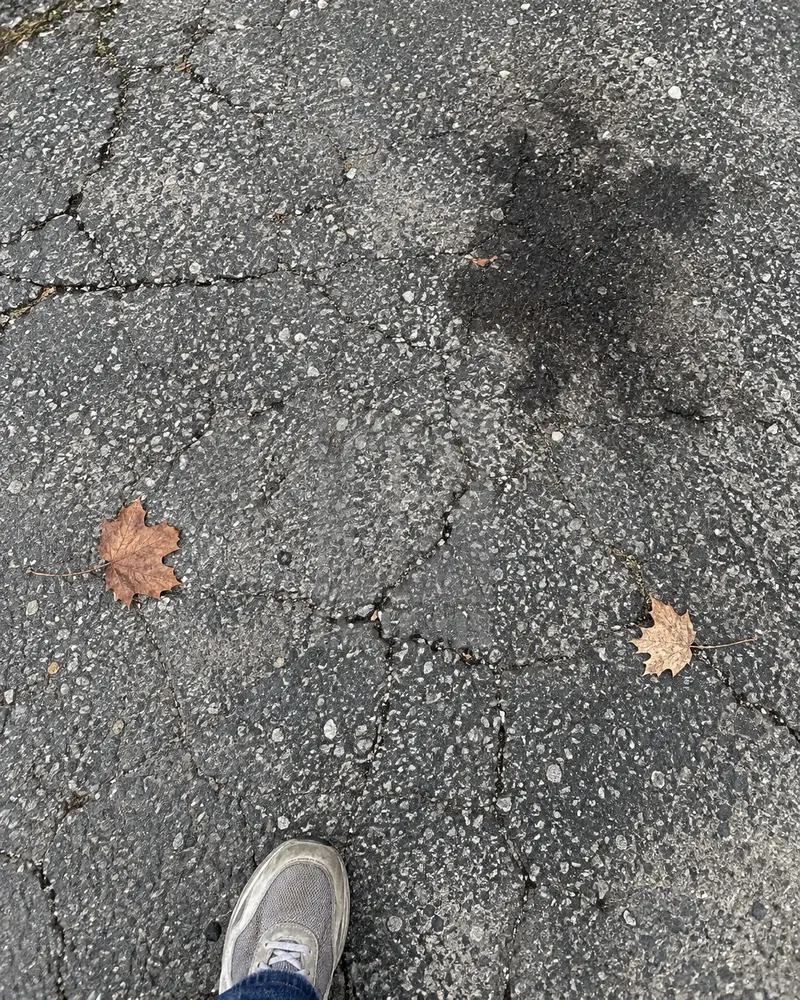
| What you see | What it means | Verdict |
|---|---|---|
| Grey, porous asphalt, stones showing | Binder oxidized by sun, water and salt | Good candidate |
| Fine, isolated cracks | Surface ageing | Good candidate, cracks cleaned out |
| Wide transverse cracks that open in winter | The pavement shrinking in the cold | Possible, if they are repaired first |
| A few potholes, one local dip | Weak spots or stone settled in one place | Possible, after a hot-mix repair or a local base fix |
| Alligator cracking over a large area | A base that flexes under the wheels | No: excavation and a new base |
| A bump that comes back every winter | Frost in poorly drained soil | No: the cause is under the stone |
| Asphalt coming off in sheets | Layers no longer bonded | No, unless the loose layer is removed |
| Water running toward the house | Reverse slope | Rarely: the layer follows the existing slope |
Two tests help you decide before we come by. The straightedge: lay a straight 10 ft (3 m) board on the driveway after rain; Québec’s Ministère des Transports calls for a levelling course once the surface is more than 8 mm off under a 3 m straightedge. The history: a driveway that was already overlaid, with every crack showing through that layer, will see them come back fast under another thin layer, as the Federal Highway Administration observes on roads overlaid again and again.
Our guide to resurfacing or rebuilding walks through the base test. The quote questionnaire also gives you a first read: it asks how old the asphalt is and what you see, and tells you right away when lighter work than a rebuild looks like enough. Include your preferred contact method in the form.
Not sure your base will hold? We probe it for free before proposing a new layer
The 7 steps of a resurfacing job that lasts
A lasting resurfacing job depends on steps you can no longer see once the layer is down. The numbers come from the standards of Québec’s Ministère des Transports (MTMD) and from Québec municipal specifications, and they are the ones we apply in a driveway.
| Step | What we do | The number that matters |
|---|---|---|
| 1. Diagnosis | Probe at the edge of the driveway, read the slopes and the cracks | More than 8 mm off under a 3 m straightedge: levelling course |
| 2. Repairs | Potholes cut square down to sound material, redone with hot mix | Cut at least 150 mm past the damage; above 10 °C |
| 3. Milling | Milling along the garage, sidewalk, street and pavers | Full thickness at the transition, never feathered to zero |
| 4. Cleaning | Broom, blower, old crack sealant removed | Dry, clean, unfrozen surface |
| 5. Tack coat | Cationic bitumen emulsion over the whole surface | 0.25 L/m² of residual bitumen on old asphalt, 0.30 on milled asphalt |
| 6. Laying | 10 mm mix delivered at about 160 °C, spread with a paver | 62 mm spread for 50 mm compacted |
| 7. Compaction | Roller right behind the paver, out to the edges | PG 58-28 binder: from 120 °C down to 80 °C; at least 93% density |
The tack coat is the easiest step to skimp on, because it disappears under the mix. When the Ministère reviewed its own job sites from 2015 to 2017, 46% had at least one tack coat deficiency, and 40% showed tack coat picked up by trucks and the paver before it was covered. A thin layer that is not bonded to the old one fails quickly, the FHWA warns; Gatineau’s 2026 specification therefore requires a tack coat in every case on an existing pavement.
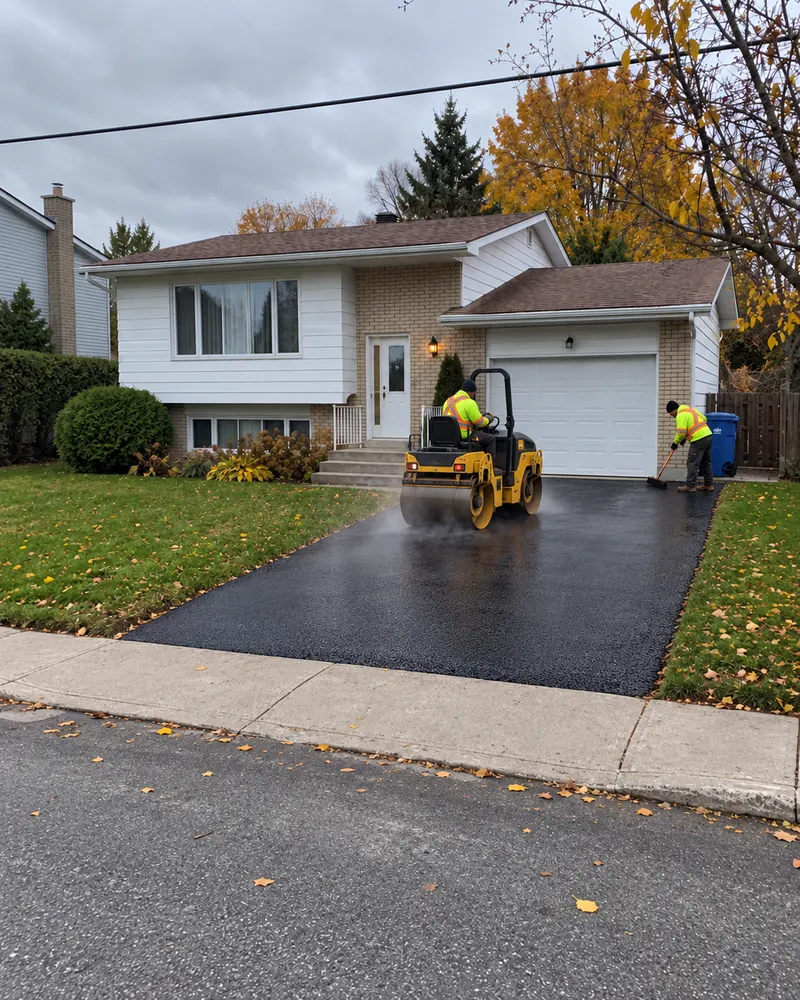
Compaction is a race against the clock: the MTMD guide considers less than 10 minutes of compaction time insufficient and 20 minutes desirable, and a thin layer cools fast in cool weather. The 93% target matters: according to the Asphalt Institute, it leaves at most 7% air voids in the mix, while from 8% up the voids connect and let air and water in.
40 or 50 mm: which thickness?
For a house driveway, the right resurfacing thickness is 50 mm after compaction; 40 mm is the floor. The MTMD guide sets the minimum thickness of a layer at three to four times the nominal size of its aggregate, or 30 to 40 mm for a 10 mm mix, and the other benchmarks point to 2 in:
- Protégez-Vous and the APCHQ: lay 2.5 to 3 in of mix to get at least 2 in (5 cm) once compacted.
- The Colorado Asphalt Pavement Association: 1.5 to 2 in of surface mix, the usual thickness of a driveway overlay.
- Laval: 50 mm of EC-10 compacted to at least 93% when the City restores a resident’s driveway after street works.
- Gatineau (2026 specification, driveway accesses): 50 mm of MUN-10 for a house, 80 mm of ESG-10 for a business or an apartment building.
| 40 mm (1.5 in) | 50 mm (2 in) | |
|---|---|---|
| Level rise, without milling | 40 mm | 50 mm |
| Minimum air temperature to pave (MTMD, Gatineau) | 10 °C | 2 °C |
| Old cracks coming through | Sooner | Delayed |
| When to choose it | Tight transitions under the threshold | House driveways, cars and pickups |
Thickness also decides the calendar: late in the fall, only the 50 mm layer can go down on a cool day, on a dry, unfrozen surface.
Garage, sidewalk, street: getting the transitions right
A 40 to 50 mm layer raises the driveway by that much, and the transitions decide whether the job looks finished or leaves a step.
- The garage threshold: the slab does not rise with the asphalt. We mill a strip in front of the door to finish flush with the slab, sloping toward the street; otherwise meltwater ends up under the door.
- The sidewalk and curb: they belong to the City. We tie the layer in at their level and never pave over them.
- The street: the joint is made at the level of the existing pavement, so the plough blade doesn’t catch an edge.
- Pavers and concrete borders: we mill along their edge to finish at their height.
- Catch basins and drains: reset to the new grade, a step the MTMD guide counts as surface preparation.
The joint feathered down to nothing, common in front of garages, is exactly what that guide says to avoid: at zero thickness the mix does not compact and its surface tears out over a few metres. Instead we cut a key, a strip of old asphalt removed so the new layer enters it at full thickness.
What a Québec winter does to a resurfaced driveway
Winter attacks a resurfaced driveway through the cracks in the old asphalt: according to the MTMD guide, Québec’s temperature swings make transverse cracks come up quickly through a new pavement, because a crack that opens in winter puts the bottom of the new layer in tension.
- Freeze-thaw: about 73 days a year when the temperature crosses 0 °C at Montréal-Trudeau (1991–2020 normals), 67 to 85 depending on the station in the region.
- Sudden swings: up to 25 °C in a few hours, and ground frozen 1.2 m to more than 3 m deep for over four months.
- Spring thaw: a road keeps only 30 to 70% of its summer strength; in 2026, load restrictions started on March 16 in zone 1, which covers Montréal.
Hence three rules on our jobs: we repair transverse cracks before the layer instead of paving over them; we hot-seal the ones that come back anyway, for $250–400 below 200 linear feet, through our asphalt repair service; and we keep heavy trucks off the driveway during the thaw, like the heating oil truck the Maine Asphalt Pavement Association mentions.
How long does resurfacing last?
A well-done resurfacing job adds 10 to 15 years to a driveway, according to Protégez-Vous and the APCHQ, provided the old asphalt is free of major cracks, dips and bumps. On roads in cold, wet states, the Federal Highway Administration measures 5 to 10 years of added service for layers under 38 mm (8 to 10 years in Maine), under traffic far heavier than any driveway sees. The same agency notes that an overlay placed on pavement still in good condition lasts longer: waiting costs years.
Three choices stretch that life: a 50 mm layer rather than a thin one, a full-rate tack coat on a clean, dry surface, and cracks sealed as soon as they come back, then sealcoating once the asphalt has hardened.
Sealcoating, repair, resurfacing or rebuilding?
The right job depends on how deep the problem goes: the surface alone calls for sealcoating, one spot for a repair, the whole surface for resurfacing, and the base for a rebuild.
| Work | 2026 price, before tax | The problem it solves | On site |
|---|---|---|---|
| Sealcoating | $265–300 up to 600 ft² | Sound asphalt turning grey | A few hours |
| Repair | Cracks and potholes quoted by dimensions and visit scope | Localized damage, sound base | One visit |
| Resurfacing | $3–5.50/ft² | Surface worn everywhere, sound base | One day |
| Rebuild | $6–10/ft² | Sunken, too thin or poorly drained base | Excavation, compacted stone, then paving |
A hardware-store “resurfacer” is not resurfacing: it is a coating spread with a squeegee that brings back the colour without adding any mix. Black Knight Airport+ in a 17 L pail ($63.99 at Canac in October 2026) covers 150 to 200 ft² in two coats, or $0.32–0.43 per square foot for the product alone, and its data sheet warns that open cracks make it peel.
Do you need a permit to resurface?
In the suburbs, resurfacing a driveway at the same size rarely needs any paperwork: Laval’s urban planning code even lists resurfacing as maintenance work. Lorraine is the exception, since its permit list includes replacing the paving of a parking area. In Montréal, the rule changes from one borough to the next:
- Saint-Laurent requires a certificate of authorization even for resurfacing.
- Verdun requires one to redo the entire surface, and allows asphalt there only in a few cases, such as a single front-yard space.
- Côte-des-Neiges–Notre-Dame-de-Grâce bans asphalt for a new layout or a replacement.
The rules for all 16 cities are in our driveway permit guide, and the borough rules are on our asphalt in Montréal page.
What your resurfacing quote should spell out
Two resurfacing prices only compare if they describe the same work: thickness after compaction, mix type (EC-10, ESG-10 or MUN-10), repairs done before the layer, milled transitions, tack coat over the whole surface, rolling out to the edges, and what stays outside the job, such as the City’s curb. A salesperson who offers a layer without looking at the cracks, the slopes and the garage threshold is selling a price per square foot, not a result.
One free visit for the base, the transitions and the thickness, then the price of your resurfacing
After paving: the first days and the first year
- Wait 2 to 3 days before driving on it, as the Maine Asphalt Pavement Association recommends, and longer in hot weather.
- Don’t turn the wheel while stopped, and vary where you park: new mix stays soft in the sun until it has hardened.
- Slide a piece of plywood under a kickstand, a jack or a ramp, and stay off the edges, the weakest part.
- Wait 6 to 12 months before a first sealcoat: Henry prohibits its product on asphalt less than 6 months old, and the Maine association advises 12 months.
- A Tempo shelter this winter? On a new layer, permanent anchors drilled once spare the driveway new holes every fall. Tempo shelter installation: single $199, double $299 before taxes; $329 and $449 with spring removal. See our prices and prices published elsewhere.
Frequently asked questions
How much does it cost to resurface an asphalt driveway in 2026?
$3 to $5.50 per square foot before tax in Greater Montréal, based on prices published by contractors in the region. A 400 ft² double driveway comes to $1,200–2,200 before tax, or $1,380–2,530 with tax; the repairs done before the layer explain most of the spread.
What asphalt thickness does resurfacing need?
A driveway is resurfaced at 50 mm compacted (2 in), and at 40 mm (1.5 in) at the very least with a 10 mm mix. Québec’s Ministère des Transports guide sets the minimum thickness of a layer at three to four times the size of its aggregate.
Can a cracked driveway be resurfaced?
Yes, if the cracks are fine or isolated and repaired before the new layer. No, if they form alligator cracking over a large area: the base flexes, and the cracks would come through the new layer within the first winters.
Does resurfacing raise the level in front of the garage door?
Laid as is, the layer would raise the threshold by 40 to 50 mm. That is why we mill a strip of old asphalt in front of the door, at the sidewalk and along the pavers: the new surface arrives there at full thickness, at the existing level, and keeps its slope toward the street.
How long should you wait before driving on a resurfaced driveway?
Two to three days, and longer when it is hot. The Ministère des Transports opens a road once the mix has cooled below 45 °C through its mass, but a driveway gets wheels turning in place: for the first months, avoid turning the wheel while stopped.
Can resurfacing be done in November?
Yes, as long as the region’s asphalt plants are producing and the weather allows. MTMD standards call for 10 °C air temperature for a layer under 50 mm and 2 °C for a 50 mm layer, on a dry, unfrozen surface: late in the season, we lay 50 mm.
How many years does resurfacing last in Québec?
10 to 15 more years for the driveway, according to Protégez-Vous and the APCHQ, if the old asphalt has no major cracks, dips or bumps. What makes it last at your place: a 50 mm layer well bonded to the old one, and cracks hot-sealed as soon as they come back.
Do you need a permit to resurface your driveway?
Not in most suburbs when the driveway keeps its size; Laval even classifies resurfacing as maintenance work. Lorraine requires a permit to replace paving, and in Montréal, Saint-Laurent requires a certificate even for resurfacing, while Verdun and Côte-des-Neiges–Notre-Dame-de-Grâce restrict asphalt.
Sources
- Ministère des Transports du Québec, Guide technique sur la mise en place des enrobés bitumineux (2009 edition): crack reflection, repairs before an overlay, levelling course, minimum thickness, laying and compaction temperatures, feathered joints, density.
- Martin Lavoie, Ministère des Transports du Québec, “Bonnes pratiques de mise en œuvre des enrobés sur les chantiers du MTQ (partie 2)”, Bitume Québec, December 8, 2021: tack coat rates (CCDG, s. 13.2.4) and 2015–2017 job sites.
- City of Gatineau, standard specification “Enrobés”, January 2026 (laying temperatures, mandatory tack coat, table 8 for driveways).
- City of Laval, special specifications for road infrastructure (V3/R1, September 2023) and urban planning code CDU-1, s. 2030.
- Ministère des Transports et de la Mobilité durable, En période de dégel, roulez léger (2026), March 12, 2026 notice on zone 1, PG 58S-28 bitumen reference prices (2026).
- Environment and Climate Change Canada, climate normals (freeze-thaw days by station).
- Protégez-Vous and APCHQ, “Comment donner une deuxième vie à votre entrée en asphalte”, August 15, 2023.
- Federal Highway Administration, The Use of Thin Asphalt Overlays for Pavement Preservation, FHWA-HIF-19-053, 2019.
- Colorado Asphalt Pavement Association, Asphalt Driveways (2020); Asphalt Institute, Engineering FAQs (air voids and density).
- Maine Asphalt Pavement Association, “Care and Maintenance of your new Driveway”.
- Henry and Black Knight Airport+ data sheets; Canac price checked October 25, 2026.
- City of Montréal, “Obtenir un permis pour aménager ou modifier un espace de stationnement” (Saint-Laurent, Verdun, Côte-des-Neiges–Notre-Dame-de-Grâce); City of Lorraine, permit checklist.
- Resurfacing prices: Casabella Pavage (Montréal, December 2025) and Les Pavages Guilmain (South Shore, January 2026).
2026 prices in detail: sources and calculator.
Asphalt resurfacing: in your city.
Montréal and Laval
North Shore
Les Moulins and Lanaudière
South Shore
Montérégie
Québec City region
Eastern Townships
Mauricie and Centre-du-Québec
Outaouais
Saguenay–Lac-Saint-Jean
Eastern Québec
Go further.
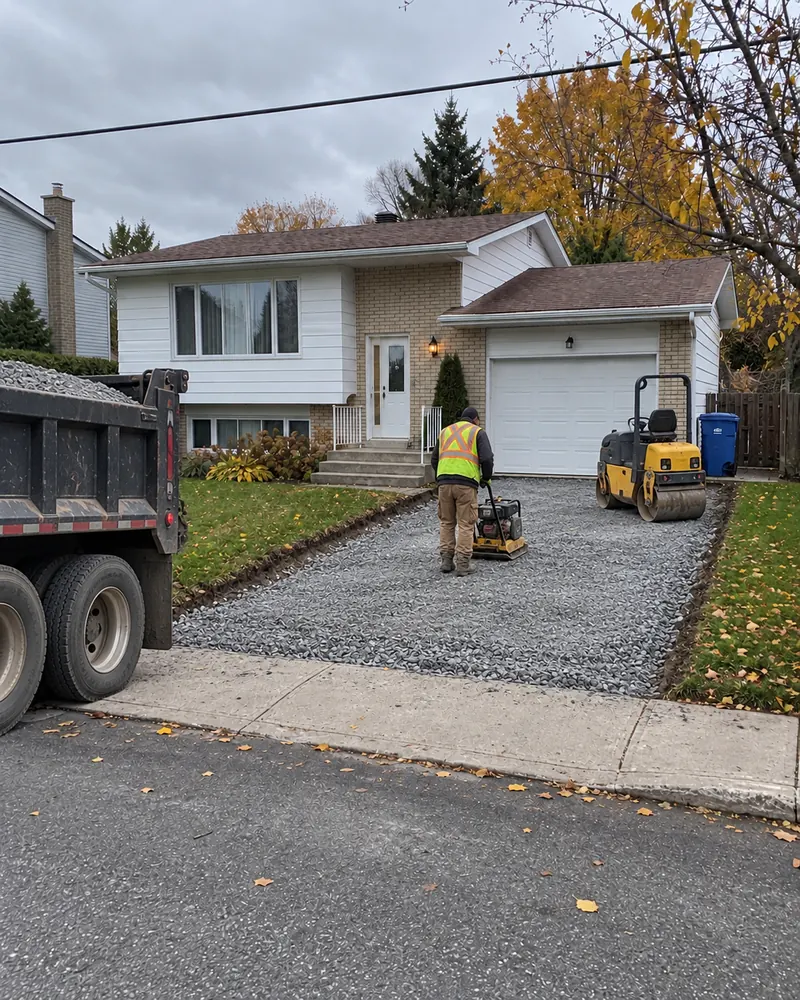
Resurfacing or rebuilding: the five-step test to find out what your driveway needs
Overlay or redo your driveway? The 3 m straightedge test, reading the cracks, probing the edge, the cost per year of each option and the combined fix that often costs least.
Read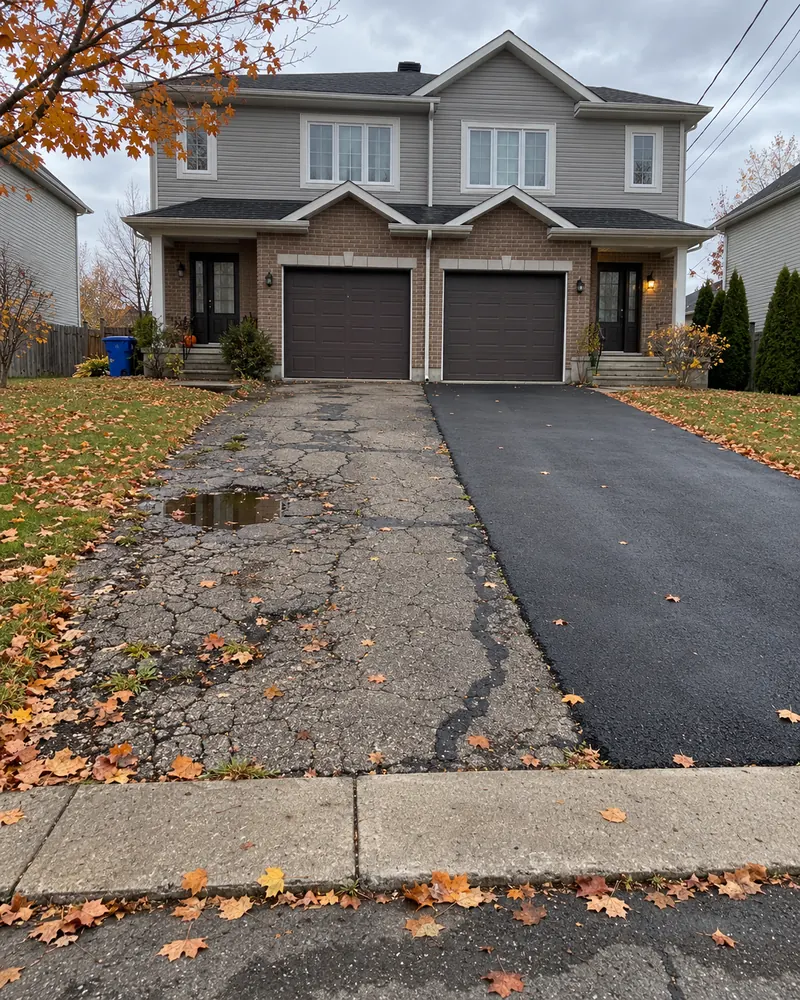
How many years does an asphalt driveway last in Quebec?
Built right, an asphalt driveway lasts 15 to 20 years or more in Quebec. The 6 benchmarks to demand, how to read the damage, and the cost per year of each fix.
Read
Your asphalt driveway and winter: what to do in October, in January and at the thaw
What to do for your asphalt driveway before the snow, during winter and at the thaw: cracks to close before the freeze, markers, de-icers, the plough blade, Tempo shelters and heavy trucks in spring.
ReadBefore the freeze, not next spring.
Describe your project in two minutes. We call you back quickly, come take a look and you get your price, free.