Sealcoating · 2026 prices
Asphalt sealcoating: cracks closed first, a thin coat second
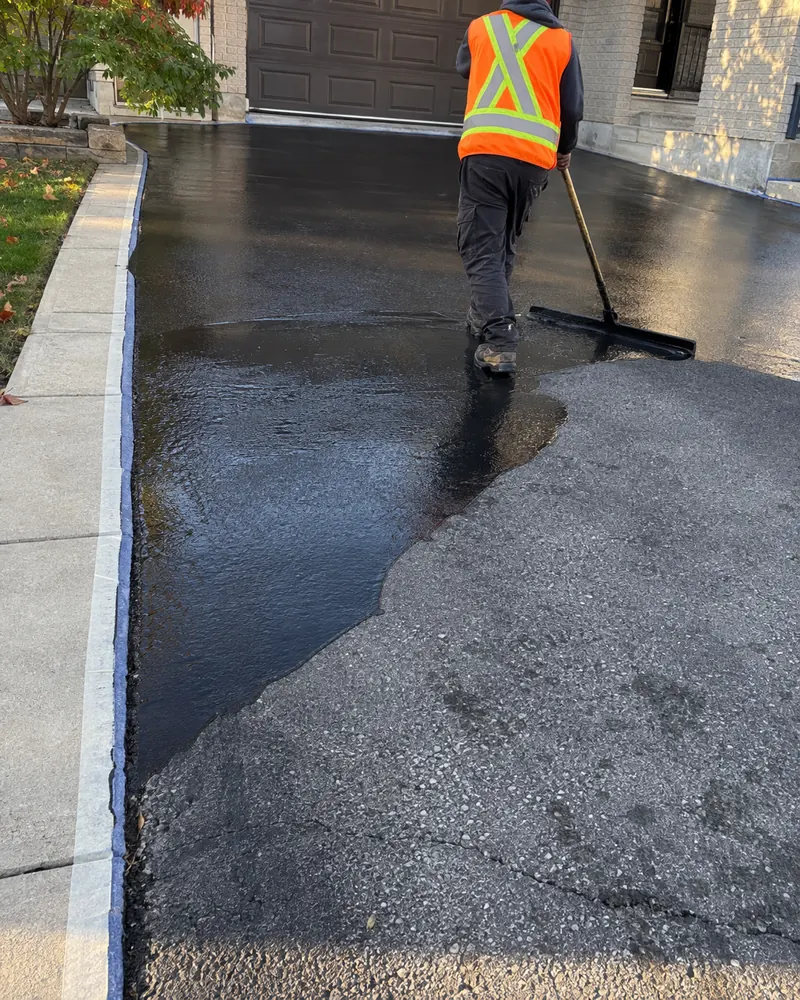
Sealcoating protects a driveway surface that is still sound and restores its colour. One Montréal provider publishes $265–300 up to 600 ft² before tax. Check preparation and crack repair separately; sealer does not replace a sound foundation.
- Free quoteWe come take a look, no obligation.
- Clear priceEvery step spelled out in the quote.
- Hot asphaltLaid with a paver, rolled.
- Quick callbackThe owner, not a salesperson.
On this page
Asphalt sealer is a bitumen emulsion, often loaded with fine sand, spread in a thin coat on a clean, dry driveway. It slows the sun’s oxidation of the bitumen, limits the water and fluids that soak into the surface, holds aggregate that is starting to come loose and restores the black colour. It is worth it on a driveway a few years old that is turning grey, not on new asphalt, and not on a driveway that is sinking.
- 2026 price: $265–300 up to 600 ft² before tax. Hot crack sealing is a separate line, $250–400 below 200 linear feet.
- How often: every 2 to 4 years, the reapplication interval manufacturers recommend according to the U.S. Geological Survey.
- First coat: not before 6 months on new asphalt (Henry); the Asphalt Institute sees no need before 2 to 5 years.
- Weather: at least 10 °C and rising, with no rain forecast for 24 hours, for most products.
Does your driveway need sealer?
| Your driveway | Our recommendation |
|---|---|
| Asphalt under 6 months old | Nothing: the bitumen hasn’t finished curing |
| 2 to 5 years old, still black and tight | Nothing, or only the cracks as they appear |
| Grey surface, aggregate starting to loosen | Cracks hot-sealed, then a thin coat of sealer |
| Oil or gas stains | Cleaning, primer on the stains, then sealer |
| Web of cracks, dips, ruts | No sealer: repair or resurfacing |
| Cracks over 20 mm | Hot-mix repair before any sealer |
Our article is asphalt sealing worth it? compares what neutral sources and the industry say. In short: no independent study puts a number on the years a sealer adds to a residential driveway, while crack sealing has measured lifespans. So we sell sealer for what it does.
Find out in 2 minutes whether your driveway needs it, then a free visit
What our application includes
- Grass and edges trimmed where they spill onto the asphalt, for a clean line.
- Full cleaning: broom, blower, then washing the greasy spots. Sealer laid over dust peels in the first season.
- Cracks first. Cracks of 3 to 20 mm are blown out and hot-sealed, for $250–400 below 200 linear feet, on top of the sealer price; Henry, like other manufacturers, warns that open cracks make sealer come loose.
- Oil stains treated with a primer, or the sealer won’t stick there.
- A thin, even coat, squeegeed or sprayed. Henry warns that a thick coat dries poorly and can turn slippery when wet; a second thin coat beats one thick one.
- Taping and protection of concrete, pavers and garage doors.
- The driveway closed while it dries, with the time it reopens.
Drying and getting back on it
| Use | Usual wait | What makes it longer |
|---|---|---|
| Walking on it | 4 to 8 hours | Shade, humidity, thick coat |
| Parking a car on it | 24 to 48 hours | Below 15 °C, damp night |
| Turning the wheel while parked | Avoid it for the first weeks | Heat, fresh sealer |
The exact wait depends on the product and the day’s weather; we confirm it when the job is done.
Products: professional or hardware store
Hardware-store pails and contractor products are petroleum bitumen emulsions; coal-tar products, which held about 1,000 times more polycyclic aromatic hydrocarbons, have been banned from sale in Canada since December 31, 2025 (SOR/2025-36).
| Option | Cost for 500 ft², before tax | What makes the difference |
|---|---|---|
| Yourself, hardware-store product | about $51–139 of product | Your time, the prep, an even coat |
| Published price | $265–300 up to 600 ft² | Cleaning, thin even coat, protected edges; hot-sealed cracks are extra, $250–400 below 200 linear feet |
The “8 years” or “10 years” printed on some pails are not backed by any independent source. Realistic protection is 2 to 4 years, and the black fades sooner where the tires run.
Parking lots and buildings
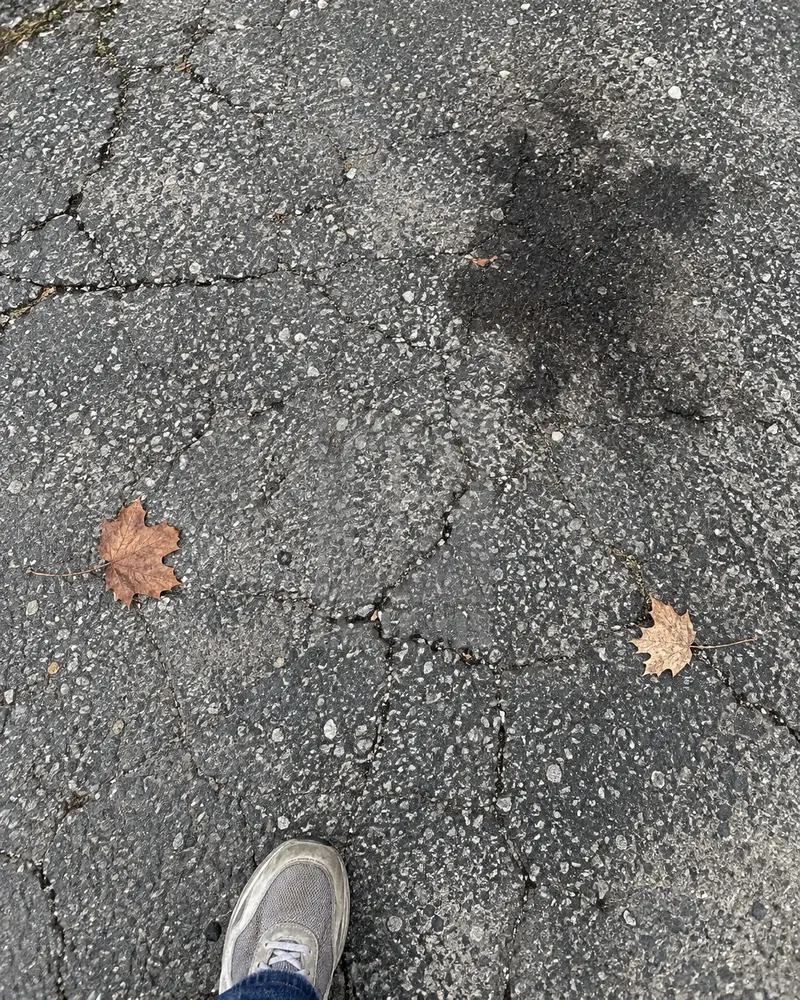
On a commercial lot, sealer mostly keeps the aggregate in place and preps the surface for new striping. We apply it in sections, early in the morning or on a weekend, and repaint the lines afterwards. A sand-loaded sealer improves traction, according to the Colorado Asphalt Pavement Association. See our commercial paving page.
End of season: what we still do this fall
Most sealers need 10 °C and above, day and night, to dry properly: in late October and November, days that allow it become rare. Crack sealing, on the other hand, still works above 5 °C in dry weather, and it is the job that protects a driveway most before winter. So we close the cracks now, and apply the black coat as soon as temperatures allow.
Frequently asked questions
How much does asphalt sealcoating cost in 2026?
The schedule used here lists $265–300 before tax up to 600 ft². For a 500 ft² example, that is about $0.53–0.60/ft²; hot crack sealing is extra, with $250–400 below 200 linear feet.
How often should an asphalt driveway be sealed?
Every 2 to 4 years, the reapplication interval manufacturers recommend according to the U.S. Geological Survey, and only when the surface greys or loses aggregate. More often adds nothing and builds up the coat.
When should a new driveway be sealed?
Not before 6 months: Henry bans its product on younger asphalt. The Asphalt Institute considers that a well-built driveway doesn’t need it for 2 to 5 years.
Does sealer make the driveway slippery?
A thin coat of a sand-loaded product does not. A coat that is too thick can be when wet, Henry warns: that is why we apply thin, in two passes if needed.
Does sealer fill cracks?
No. It bridges hairline surface cracks, but an open crack of 3 mm or more has to be hot-sealed first; otherwise the sealer lifts around it and water keeps getting in.
Can sealer be applied in the fall?
Only on a day of at least 10 °C, dry, with no rain forecast for 24 hours and no overnight frost for most products. In late fall, we seal cracks, which need 5 °C.
Do you work in my city?
The crew is based in Montréal and works across Québec, first in Montréal, Laval, the North Shore, Lanaudière and the South Shore. See the service areas or use the request form.
Sources
- Asphalt Institute, Engineering FAQs (sealer on a new driveway, 2 to 5 years, coats that are too thick).
- U.S. Geological Survey, Coal-Tar-Based Pavement Sealcoat (reapplication every 2 to 4 years, PAH content).
- Government of Canada, Coal Tar-based Sealant Products Regulations (SOR/2025-36).
- Henry, Techniseal, Black Knight and Resisto technical sheets (minimum asphalt age, temperatures, thick coats, cracks); store prices checked October 25, 2026.
- Québec transport ministry, crack-sealing practice (3–20 mm, 5–30 °C).
- Colorado Asphalt Pavement Association, Asphalt Driveways (sand-loaded sealers and traction).
- Prices: Les Pavages Guilmain and scellementasphalte.ca (Montréal), compiled on our price page.
2026 prices in detail: sources and calculator.
Sealcoating: in your city.
Montréal and Laval
North Shore
Les Moulins and Lanaudière
South Shore
Montérégie
Québec City region
Eastern Townships
Mauricie and Centre-du-Québec
Outaouais
Saguenay–Lac-Saint-Jean
Eastern Québec
Go further.
How many years does an asphalt driveway last in Quebec?
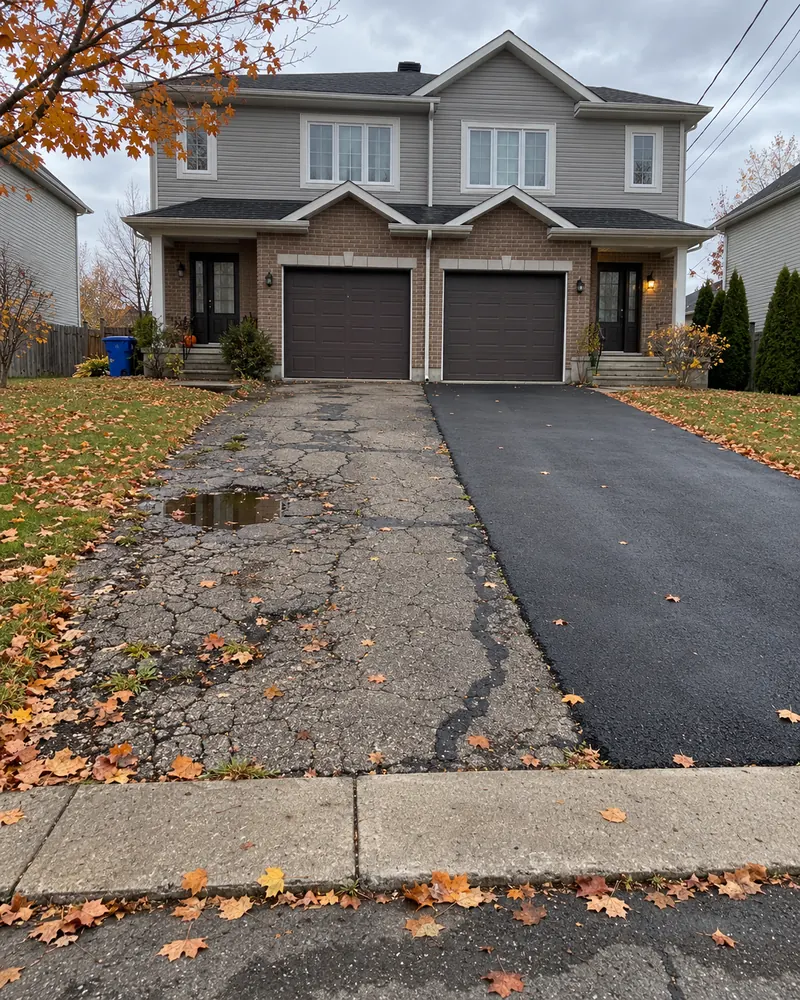
Built right, an asphalt driveway lasts 15 to 20 years or more in Quebec. The 6 benchmarks to demand, how to read the damage, and the cost per year of each fix.
Read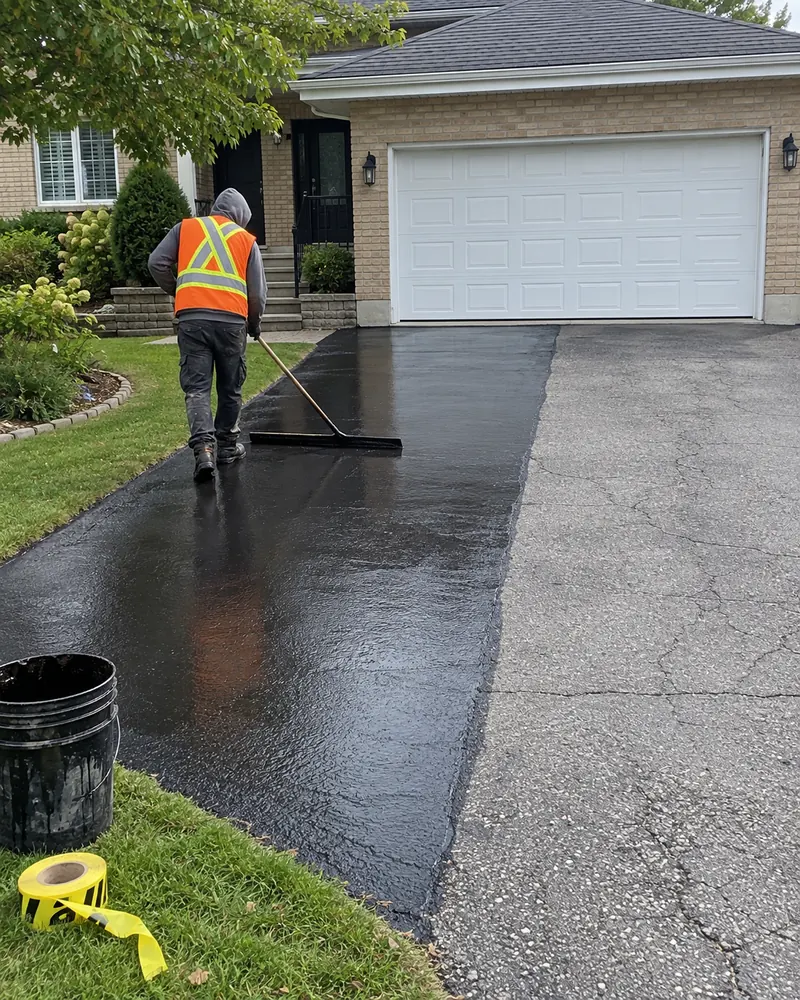
Is asphalt sealing worth it? What the evidence says
When asphalt sealer is useful, what it cannot fix, and how to compare preparation and prices. Contractor and DIY cost benchmarks for Québec driveways.
Read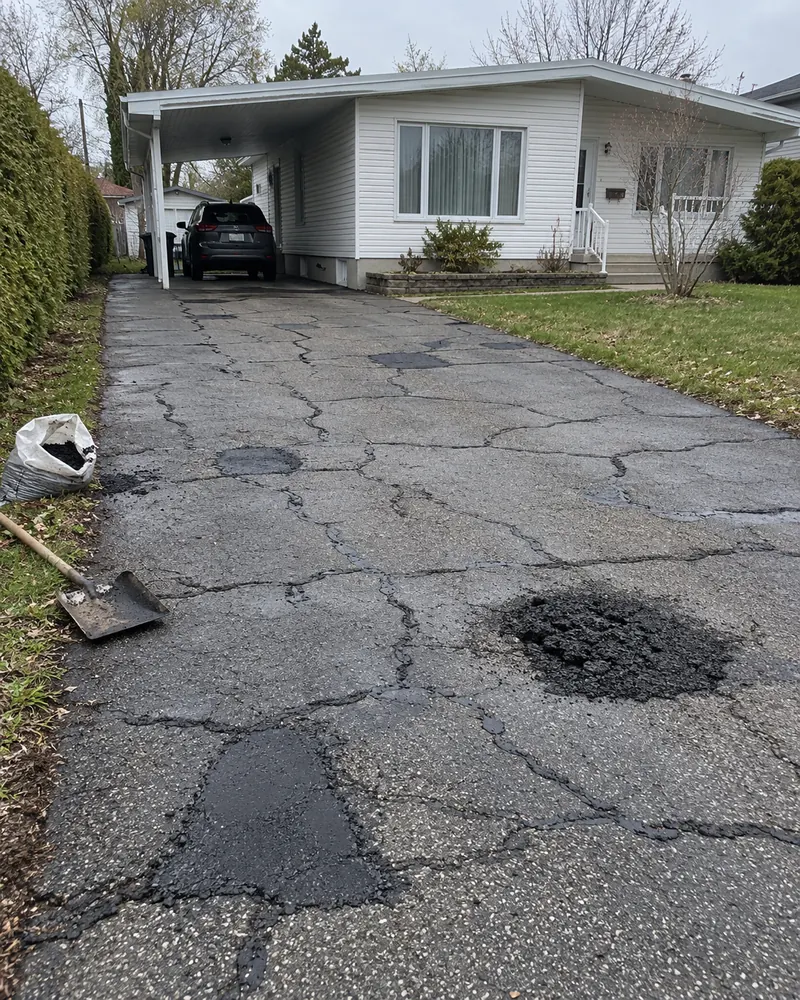
When to redo your asphalt driveway: seven signs ranked by urgency
Alligator cracking, dips that hold water, winter bumps, crumbling edges, potholes, a grey surface: what each sign means, what can’t wait until after winter and what it costs in 2026.
ReadBefore the freeze, not next spring.
Describe your project in two minutes. We call you back quickly, come take a look and you get your price, free.